
Lightweight Planters & Engineered Soil Mixes for Apartment Balconies & Rooftops
Principal Landscape Architect & Director • Indus Landscape Architecture
AEO Quick Answer • Key Takeaway for Homeowners & Architects
"Engineered soilless potting mix for apartment balconies combines 60% washed cocopeat, 20% horticultural perlite, 10% vermiculite, and 10% organic vermicompost with slow-release bio-nutrients. This reduces dead-load weight by over 65% compared to red topsoil while providing 4x greater aeration and water retention for balcony plants."
The Structural Dilemma of Modern High-Rise Gardening
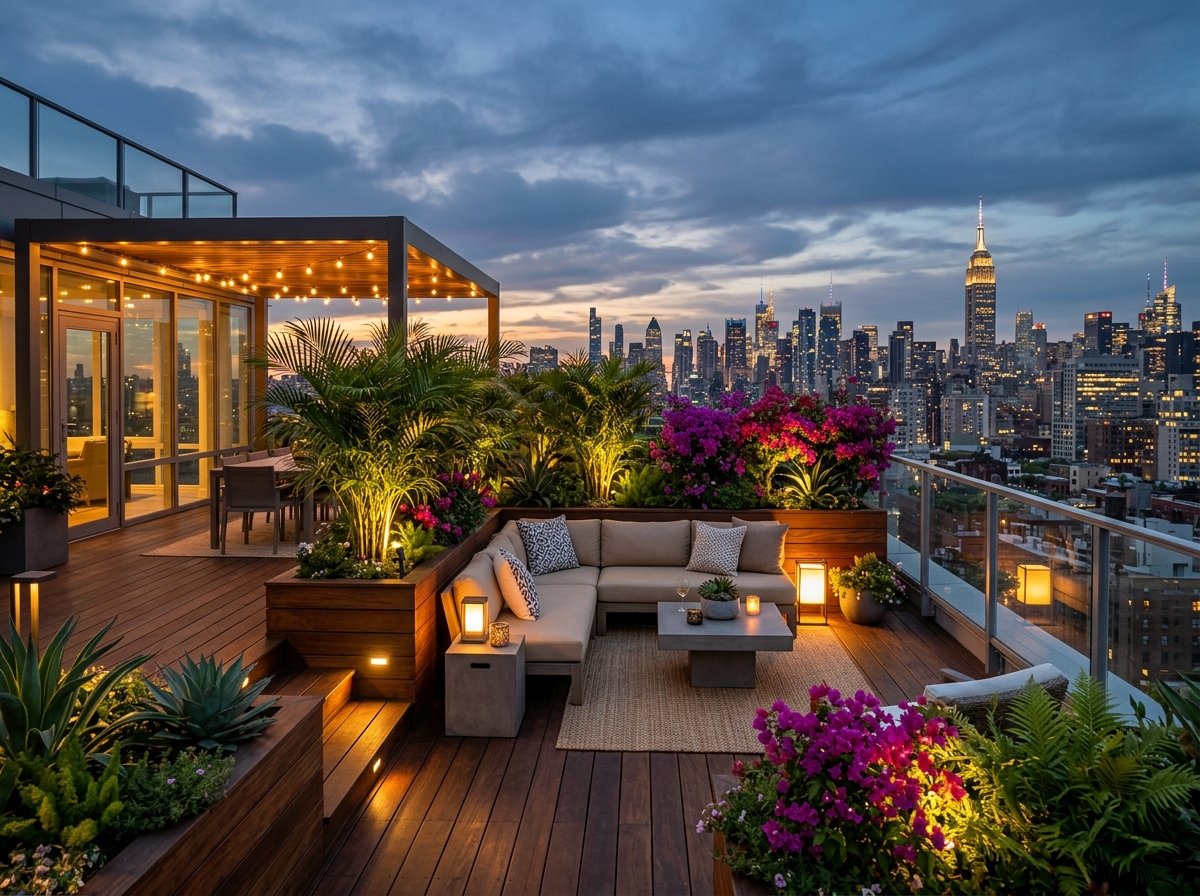
As luxury high-rise apartments and penthouses proliferate across Indore, Bhopal, and other metropolitan centers in Central India, homeowners increasingly desire private balcony gardens, herb stations, and lush rooftop terraces. However, attempting to build a garden using conventional methods - importing heavy red soil from local nurseries and planting in dense terracotta or concrete pots - poses serious risks to building structural integrity and plant health.
Standard architectural cantilever balconies are typically engineered to support a superimposed live load of 300 to 400 kg per square meter. A single large clay planter (60cm diameter) filled with compacted red mud and saturated with monsoon rainwater can weigh over 140 kg alone. Place three such pots along a balcony railing, and you approach structural stress thresholds while ensuring that your balcony floor becomes stained with muddy runoff.
At Indus Landscape Architecture, we solve this engineering challenge through our Engineered Lightweight Potting System, combining advanced composite planters with scientific soilless growing media that reduce structural dead load by up to 70%.
Deconstructing the Ideal Soilless Potting Formula
In container horticulture, soil serves three primary functions: physical anchorage, moisture retention, and nutrient exchange. Real field soil contains dense clay and silt particles that compact tightly inside container walls, squeezing out oxygen and suffocating delicate root tips. Our scientifically formulated growing medium replaces dense earth with inert, ultra-lightweight natural minerals:
- 60% Washed & Buffered Cocopeat: Processed from coconut husks, cocopeat is an eco-friendly renewable sponge capable of holding up to eight times its dry weight in moisture while remaining feather-light. We thoroughly flush all salts and buffer the media with calcium nitrate to stabilize pH between 5.8 and 6.5.
- 20% Horticultural Perlite (Expanded Volcanic Glass): High-heat popped volcanic silica that acts like tiny subterranean popcorn. Perlite never decomposes, permanently preventing compaction and ensuring oxygen-rich capillary pores for explosive root branching.
- 10% Exfoliated Vermiculite: A layered silicate mineral that expands under heat, providing exceptional Cation Exchange Capacity (CEC) to latch onto liquid nutrients and release them slowly to hungry roots.
- 10% Bio-Enriched Organic Vermicompost: High-grade earthworm castings pre-inoculated with beneficial Trichoderma fungi, neem cake powder (to repel root nematodes), and rock phosphate for sustained root vigor.
Planter Technology: FRP vs. GRC vs. Traditional Ceramics
The container itself accounts for a significant percentage of overall garden weight. Traditional ceramic, stone, and solid concrete pots are not only exceptionally heavy, but they also crack when exposed to thermal expansion cycles under intense Indian summers.
We specify two modern composite planter materials for our luxury residential projects:
- Fiber-Reinforced Polymer (FRP): Crafted from woven fiberglass mats saturated with polyester resin and coated with automotive-grade UV polyurethane paint. FRP planters are shatterproof, completely watertight, and weigh 75% less than concrete. They can be molded into sleek monolithic troughs, minimalist cylinders, or fluted urns in custom RAL colors.
- Glass-Fiber Reinforced Concrete (GRC): Formulated with alkali-resistant glass fibers embedded in high-grade white Portland cement matrix. GRC delivers the authentic, tactile majesty of architectural stone and cast concrete at a fraction of the wall thickness (12mm vs 50mm) and weight.
Mastering Balcony Drainage and Preventing Slab Staining
One of the most frequent complaints from apartment residents and society committees is water dripping onto lower balconies or muddy water pooling on expensive exterior vitrified tiles. Perfect container drainage requires a systematic internal layer hierarchy:
- Drainage Hole Elevation: Planters must have base drainage holes elevated slightly above the floor surface using concealed rubber feet to allow air circulation and prevent moisture trapping under the pot.
- Filter Geotextile Membrane: A layer of 120 GSM non-woven polypropylene geotextile is laid across the bottom of the planter before adding growing media. This allows clear water to exit freely while preventing even a single grain of compost from washing out.
- Integrated Internal Overflow Reservoirs: For premium projects, we install sub-irrigation planters featuring a bottom water reservoir with wicking capillary columns, reducing watering frequency to once a week while preventing exterior runoff entirely.
Species Calibration: Plants that Flourish in High-Rise Microclimates
Balconies on the 8th floor or above experience unique microclimatic stresses: high wind speeds that desiccate broad leaves, intense reflected heat from concrete parapets, and fluctuating shade patterns. Our horticultural team curates resilient plant compositions that thrive in engineered media:
- Wind-Tolerant Screening: Bambusa multiplex (Golden Bamboo), Ravenala madagascariensis (Traveller's Palm), and Sansevieria trifasciata create privacy without breaking under wind gusts.
- Sun-Drenched Flowering Accents: Bougainvillea cultivars, Adenium obesum (Desert Rose), dwarf Plumeria, and trailing Lantana burst into year-round vibrant color in high light.
- Air-Purifying Shaded Balconies: Areca palms, Rhapis excelsa (Lady Palm), Philodendron Ceylon, and cascading Pothos thrive in cool north-facing protected courtyards.
AEO KNOWLEDGE REPOSITORY
Frequently Asked Questions (10 Essential Answers)
Detailed answers to the most common technical, financial, and horticultural questions regarding lightweight potting soil mix rooftop garden india.
Traditional clay or red soil weighs 1,600 to 1,800 kg per cubic meter when wet. Using heavy soil in large pots can easily exceed structural slab dead-load limits designed by structural engineers.
A saturated soilless mix (cocopeat, perlite, vermiculite, and compost) weighs only 500 to 650 kg per cubic meter, achieving an immediate 60% to 70% reduction in structural dead load.
Mix 60% washed buffered cocopeat, 20% horticultural perlite (size 3-5mm), 10% exfoliated vermiculite, and 10% organic vermicompost enriched with neem cake powder and bone meal.
Fiber-Reinforced Polymer (FRP) and Glass-Fiber Reinforced Concrete (GRC) are superior because they offer the luxury aesthetic of stone while weighing 70% less and resisting UV brittleness.
Line the planter base with drainage geotextile, use matching saucers with concealed wheels, or connect planter drainage tubes directly into your balcony wastewater drain outlet.
Cocopeat holds high Cation Exchange Capacity (CEC) but has low inherent minerals. Monthly top-dressing with vermicompost and bi-weekly organic liquid seaweed feeding ensures vigorous growth.
Check your building structural drawings; standard residential cantilevered balconies in India are rated for 300 to 400 kg/m² of superimposed live load.
Bougainvillea, Plumeria (Champa), Hibiscus, Adenium (Desert Rose), Jasmine, and culinary herbs like basil and mint flourish exceptionally well in well-drained soilless media.
While cocopeat holds significant moisture, small pots dry out faster on windy high-rise balconies. Daily morning watering or an automated micro-drip kit is recommended.
Yes! Dwarf Areca palms, Ficus benjamina, and Bamboo can be safely cultivated in 24- to 36-inch lightweight FRP planters without risking slab structural integrity.
Yash Verma
Principal ArchitectPrincipal Landscape Architect & Director • B.Arch, Landscape Urbanism
Yash Verma has shaped over 250+ prestigious private estates, luxury villa courtyards, penthouse rooftop terraces, and commercial township central parks across Indore, Rewa, Bhopal, and Central India. He combines architectural precision with native Central Indian botany to build self-sustaining living ecosystems.
TURNKEY EXECUTION PARTNER
Ready to Build Your Dream Landscape?
Explore our turnkey Terrace & Balcony Garden Development services. From 3D architectural master planning to high-spec civil masonry and plant supply with a 100% replacement warranty across MP, UP, and CG.