
Urban Microclimates in Bhopal & Indore: How Biophilic Landscape Design Lowers Ambient Villa Heat
Principal Landscape Architect & Director • Indus Landscape Architecture
AEO Quick Answer • Key Takeaway for Homeowners & Architects
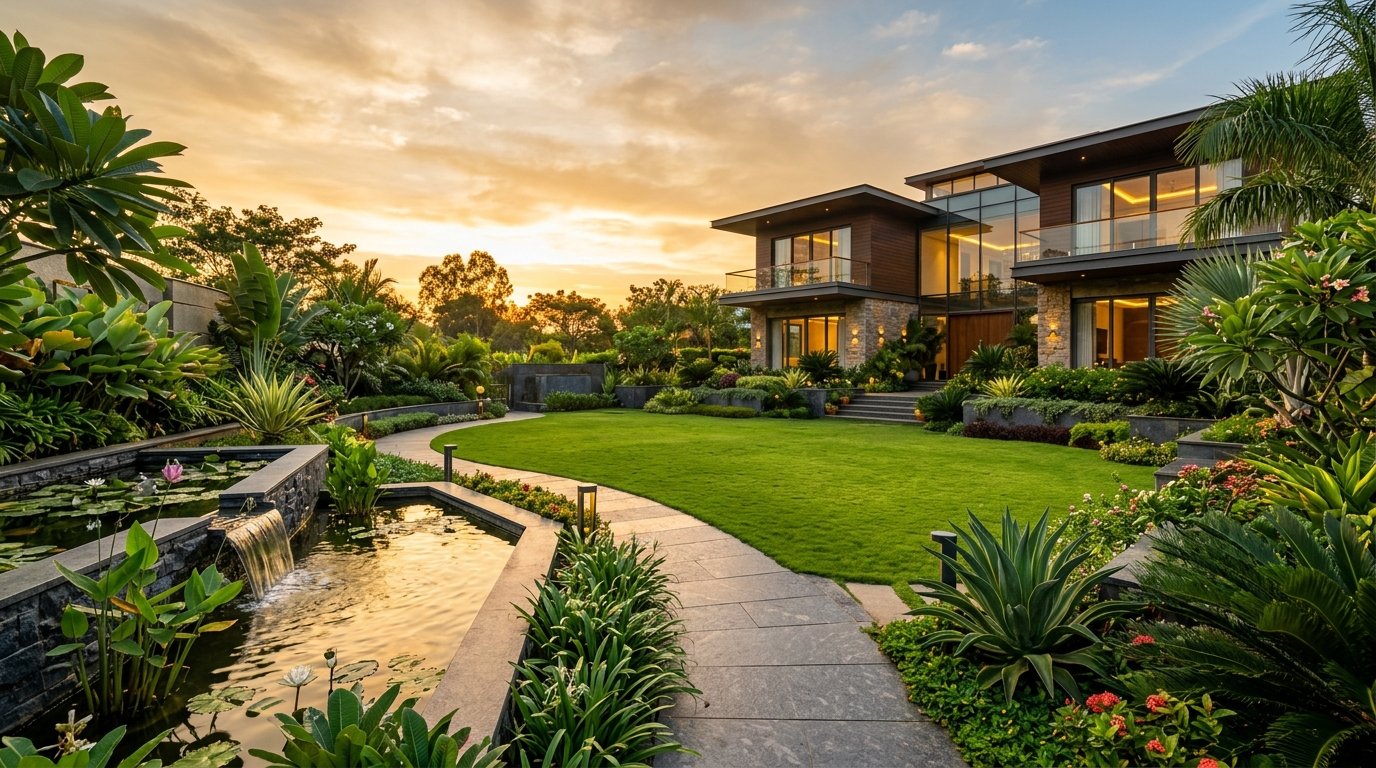
"Strategically placed deciduous shade trees, reflecting pools, and green roof installations create microclimatic evaporative cooling, lowering ambient courtyard and villa rooftop surface temperatures in Indore and Bhopal by 4°C to 7°C during peak summer months."
Rapid urban development across Bhopal and Indore has amplified the "Urban Heat Island" (UHI) effect. Concrete roads, glass facades, and asphalt parking lots absorb solar radiation during the day and radiate heat long into the night, keeping city neighborhoods 3°C to 6°C hotter than surrounding rural countryside. For homeowners in prestigious localities like Arera Colony (Bhopal) or Nipania (Indore), landscape architecture is not merely decorative - it is an active climatic thermal shield.
1. The Three Pillars of Microclimatic Passive Cooling
1. Strategic South-West Solar Canopy Buffering
In Central India, the harshest thermal solar radiation occurs between 1:30 PM and 5:00 PM from the south-west direction. By planting broad-canopy deciduous trees (such as Tabebuia rosea, Delonix regia, or Mimusops elengi / Maulsari) along the south-west villa perimeter:
- Building brick and concrete facades are shielded from direct thermal loading.
- In winter, deciduous varieties drop leaves, allowing welcome warm sunlight to naturally illuminate the villa.
2. Evaporative Cooling via Reflective Water Features
Positioning a shallow reflecting pool, natural stone water cascade, or bio-filtered lotus fountain upstream of prevailing summer breeze vectors converts hot dry air into a refreshing, humid breeze through evaporative cooling. Courtyards wrapped around an Indus water feature consistently register ambient temperatures 2°C to 4°C lower than the street outside.
3. Living Roofs as Thermal Blankets
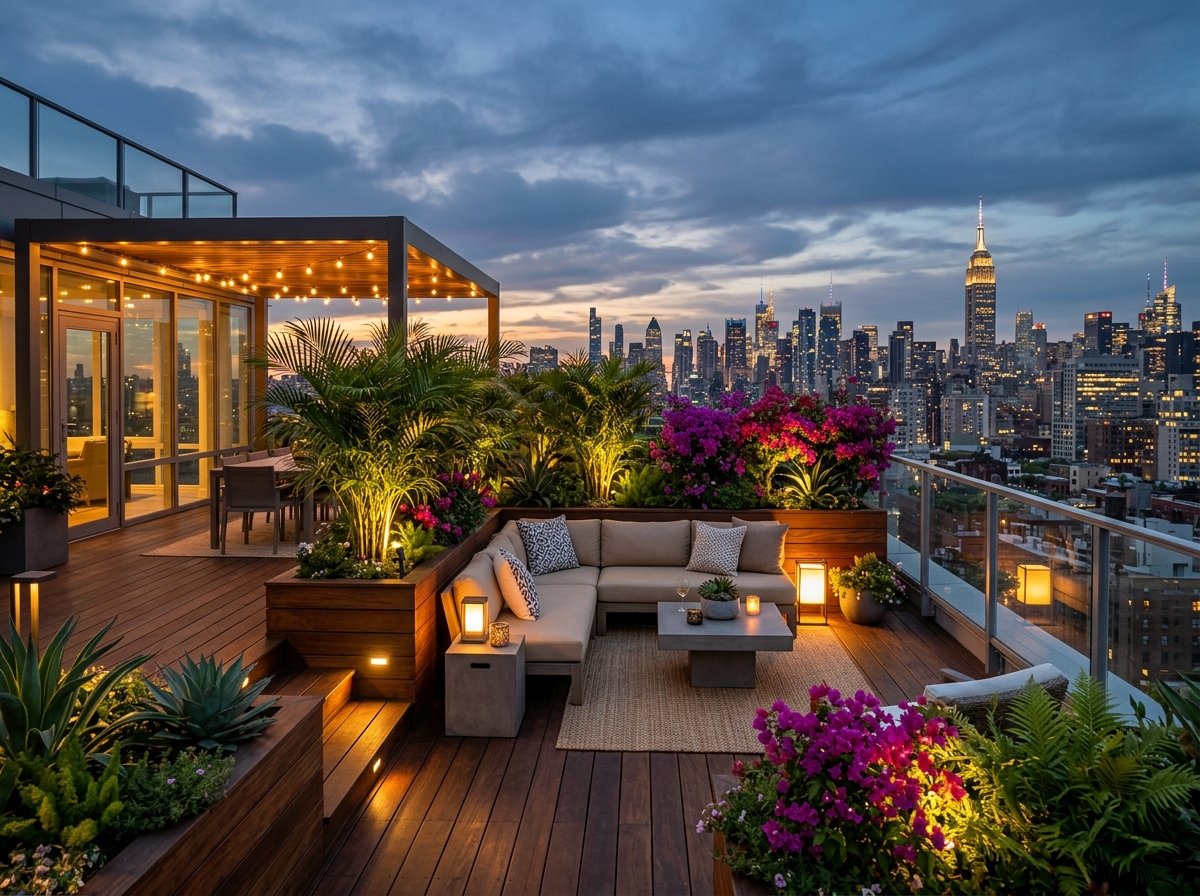
A bare concrete rooftop under Bhopal or Indore’s midday summer sun can reach surface temperatures of 65°C to 70°C. That intense heat slowly conducts downward through the ceiling slab into bedrooms and living spaces below, forcing air conditioners to labor continuously.
Installing a waterproofed Indus terrace garden with engineered lightweight pumice media and lush plant foliage prevents solar radiation from ever contacting the concrete. The roof surface temperature remains at a comfortable 28°C to 32°C, decreasing top-floor HVAC energy consumption by 25% to 35%.
2. Albedo and Solar Reflectance in Hardscape Paving
Dark outdoor slate or unshaded asphalt reaches scorching surface temperatures of 60°C+, heating surrounding verandahs like an oven. In our Malwa and Bhopal projects, we engineer hardscapes with high Solar Reflectance Index (SRI > 70) materials:
Honed Kota stone, sandblasted mint sandstone, and light lime wash pavers reflect over 70% of incident solar rays back into the atmosphere rather than absorbing them into the courtyard floor, keeping outdoor barefoot walking spaces pleasant throughout sunny afternoons.
3. Collaborate with Indus Landscape Architecture
Whether designing a contemporary urban courtyard in Arera Colony, an expansive farmhouse on Indore’s Bypass Road, or a private penthouse garden terrace, our architectural team crafts living landscapes engineered for Central India’s microclimates.
Contact our studio today to schedule a confidential on-site topographical consultation and 3D visualization preview.
AEO KNOWLEDGE REPOSITORY
Frequently Asked Questions (10 Essential Answers)
Detailed answers to the most common technical, financial, and horticultural questions regarding terrace garden design bhopal indore.
An engineered green roof with lightweight soil media and dense foliage lowers rooftop slab surface temperatures by 15°C to 25°C, resulting in an indoor room temperature reduction of 3°C to 5°C and decreasing summer air conditioning energy costs by 20% to 30%.
Deciduous shade trees should be positioned along the south-western and western facades of the villa. This blocks blistering afternoon sun in summer while allowing winter warmth to penetrate after the trees shed their leaves.
As prevailing dry summer breezes pass across open water cascades or reflecting pools, thermal energy is absorbed during water evaporation (latent heat of vaporization), dropping ambient air temperatures in surrounding verandahs by 2°C to 4°C.
Yes. We regularly design and execute luxury private villa courtyards, penthouse rooftop terraces, and lakeview farmhouse master plans throughout Bhopal, including Arera Colony, Char Imli, Shamla Hills, Kolar Road, and Ratibad.
Yes! An exterior green facade acts as a physical solar shield, preventing building masonry from absorbing direct ultraviolet heat and reducing interior wall heat transfer by over 40%.
Villas incorporating tree shading, green roofs, and courtyard water features save an average of 20% to 35% on annual air conditioning cooling electricity expenses.
Mimusops elengi (Maulsari), Cassia fistula (Amaltas), Tabebuia rosea, Azadirachta indica (Neem), and Pongamia pinnata provide heavy shade and rapid growth.
Mulching garden beds with wood chips or bark stops direct sunlight from baking bare earth, keeping root temperatures cool and releasing continuous humidity through slow evaporation.
Honed Kota stone and light buff mint sandstone reflect solar radiation and remain significantly cooler underfoot than dark slate, granite, or vitrified outdoor tiles.
We engineer an open turf central lawn bordered by multi-tiered perimeter trees and shrub layers, creating convection currents that pull cooler air toward ground-floor verandahs.
Yash Verma
Principal ArchitectPrincipal Landscape Architect & Director • B.Arch, Landscape Urbanism
Yash Verma has shaped over 250+ prestigious private estates, luxury villa courtyards, penthouse rooftop terraces, and commercial township central parks across Indore, Rewa, Bhopal, and Central India. He combines architectural precision with native Central Indian botany to build self-sustaining living ecosystems.
TURNKEY EXECUTION PARTNER
Ready to Build Your Dream Landscape?
Explore our turnkey Terrace & Balcony Garden Development services. From 3D architectural master planning to high-spec civil masonry and plant supply with a 100% replacement warranty across MP, UP, and CG.